

POP Module 2 - Power Budget
Solar Power Systems and Energy Management
Master solar power fundamentals, battery management, troubleshooting, and sustainable operation of off-grid POP systems
Learning Objectives
By the end of this module, you will be able to:
Power Budget Planning
Calculating energy consumption and ensuring adequate solar/battery capacity
Understanding power consumption is essential for reliable POP operation. Each piece of equipment draws power continuously, and the total load must be balanced against solar production and battery capacity.
Typical POP Equipment Power Draw
Power Budget & Energy Consumption
Understanding the energy requirements for POP trailer operations
LiteBeam 5AC Gen2 (Backhaul)
Power Draw
7W
Daily Energy
168 Wh
Quantity
1 per POP
UniFi U6 Mesh Pro (Access Point)
Power Draw
9W
Daily Energy
216 Wh
Quantity
1-2 per POP
Network Switch (PoE)
Power Draw
15W
Daily Energy
360 Wh
Quantity
1 per POP
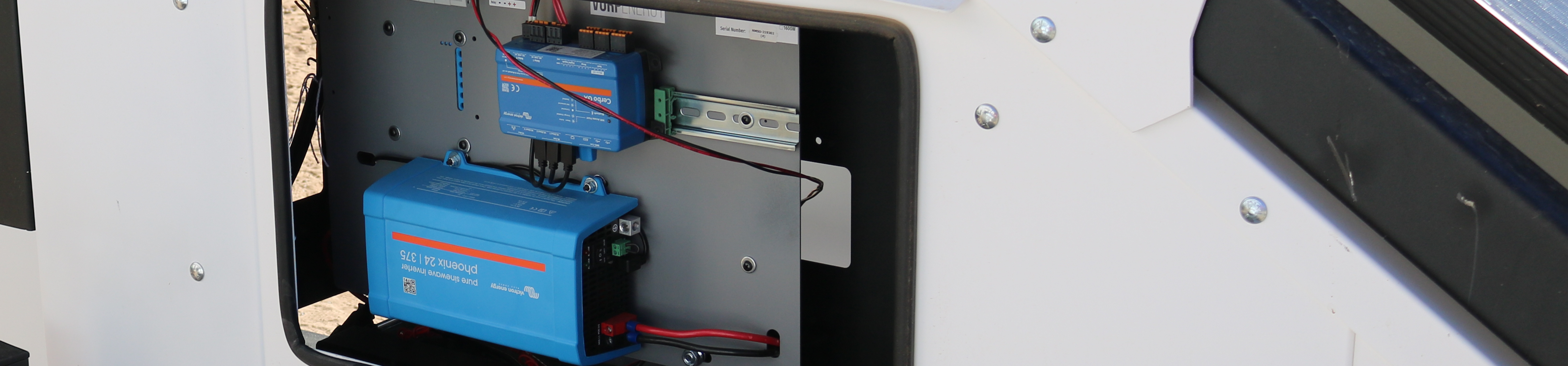
Cerbo GX Monitoring System
Power Draw
3W
Daily Energy
72 Wh
Quantity
1 per POP
📊 Total Typical Load
Continuous Power
34W
Daily Energy
816 Wh
Monthly Energy
24.5 kWh
Power Budget Calculation Example
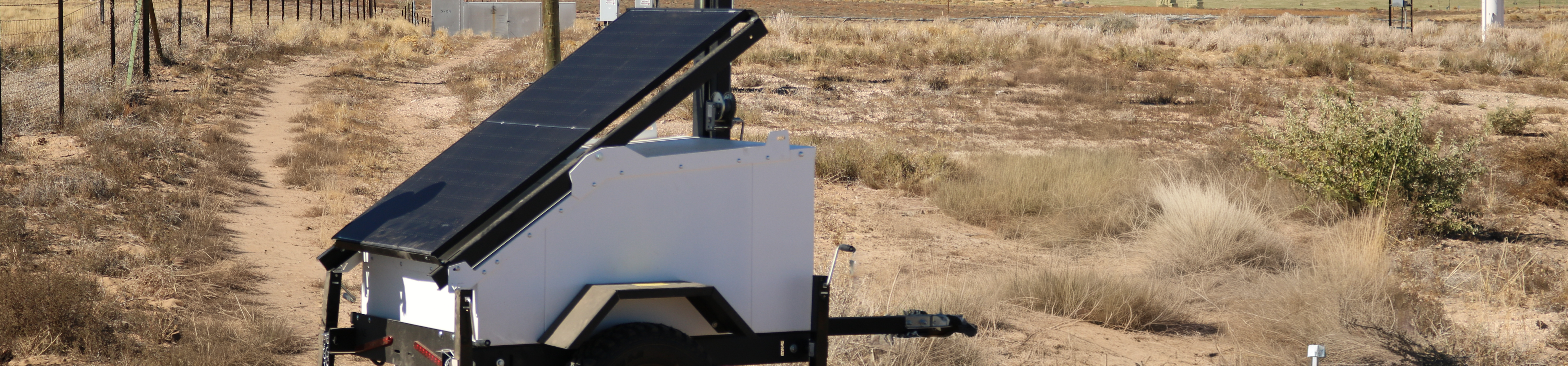
Scenario: Standard POP with 800W solar array and 400Ah @ 12V battery bank
Daily Solar Production (Average)
800W × 5 peak sun hours = 4000 Wh/day
New Mexico averages 5-6 peak sun hours daily. Winter may be 4-5 hours, summer 6-7 hours.
Battery Capacity (Usable)
400Ah × 12V × 80% = 3840 Wh usable
LiFePO4 batteries allow 80% depth of discharge. SLA batteries only 50% (2400 Wh usable).
⚖️ Energy Balance:
- Daily consumption: 816 Wh
- Daily production: 4000 Wh
- Net surplus: +3184 Wh/day (charges batteries)
- Autonomy: 3840 Wh ÷ 816 Wh/day = 4.7 days without sun
This system has excellent energy margin and can operate through extended cloudy periods.
When to Reduce Loads
If batteries drop below 30% SOC during prolonged cloudy weather, consider temporarily powering down non-essential access points or relocating POP to a sunnier location. The LiteBeam backhaul should remain powered to maintain connectivity.