


POP Module 3 - Mobility Features
Deployment and Mobility
Master safe hitching procedures, site selection criteria, trailer deployment, relocation processes, and safety protocols
Learning Objectives
By the end of this module, you will be able to:
Mobility Features and Hitch System
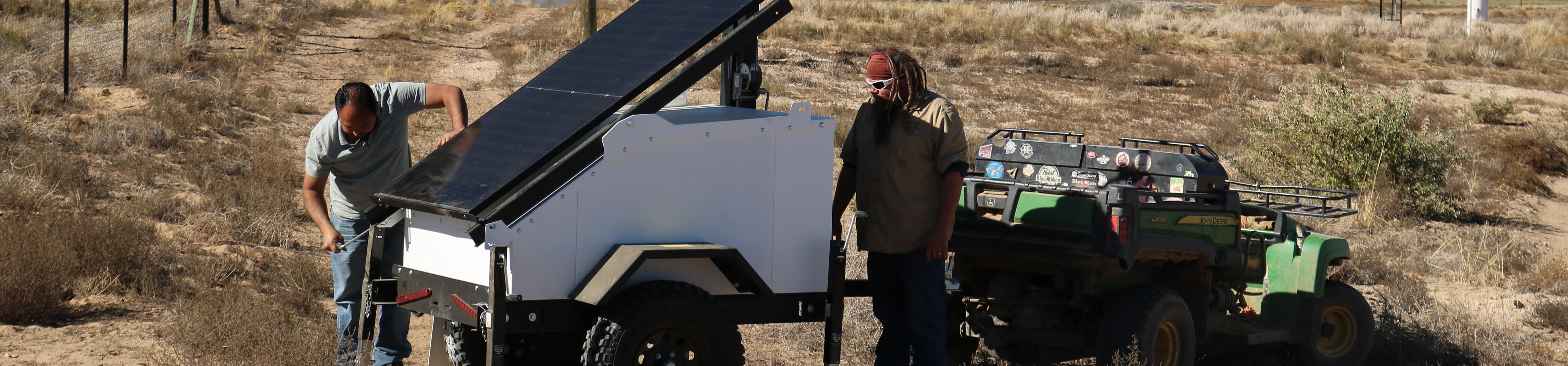
The Vorp POP trailer is designed for mobility, allowing relocation between fields, research plots, and ASC locations as connectivity needs change. Understanding the trailer's transport features and limitations is essential for safe and efficient deployment.
Key Mobility Components
Mobility & Transport Systems
Trailer components enabling field deployment and relocation
Standard 2" Ball Hitch (Detachable)
Function: Connects trailer to tow vehicle for transport. The hitch assembly can be removed after deployment for long-term stationary operation, reducing theft risk and improving stability.
- Full-size pickup trucks (F-150, Silverado, Ram 1500, etc.)
- Mid-size trucks with appropriate tow rating
- SUVs with 2000+ lb tow capacity
- Must have Class II or higher hitch receiver
Note: Most NMSU ASC fleet vehicles are equipped with appropriate hitches. Verify tow capacity before transport.
Off-Road Tires and Suspension
Function: Enables transport over rough field conditions, dirt roads, and uneven terrain typical of agricultural settings.
Four Corner Stabilizing Jacks
Function: Provide stable, level platform for long-term stationary deployment. Jacks lift trailer frame off suspension, preventing settling and reducing stress on components.
- Position trailer on level ground (use level tool)
- Lower all four jacks until they contact ground
- Continue lowering jacks evenly to lift trailer slightly off suspension
- Verify stability by gently rocking trailer (should not move)
- Place jack foot pads on solid surface (boards if on soft soil)
⚠️ Important: Never raise mast or work on trailer without stabilizing jacks deployed.
Telescopic Mast with Winch System
Function: Elevates wireless antennas for optimal line-of-sight and coverage. Mast retracts for transport to meet road clearance requirements and reduce wind resistance.
- Mast MUST be fully retracted before transport
- Secure mast with locking pin to prevent extension during travel
- Verify all antenna cables are secured and not hanging loose
- Check overhead clearances (bridges, power lines, trees)
Mobility Best Practices
- Retract mast completely
- Raise stabilizing jacks
- Secure all loose items in equipment enclosure
- Disconnect shore power (if applicable)
- Verify tire pressure (35 PSI typical)
- Attach safety chains to vehicle
- Test trailer lights (brake, turn signals)
- Drive slowly over rough terrain (<10 mph)
- Avoid sudden stops or sharp turns
- Watch for low-hanging obstacles
- Use spotter when backing up
- Check trailer periodically on long trips