

POP Module 2 - Solar Basics
Solar Power Systems and Energy Management
Master solar power fundamentals, battery management, troubleshooting, and sustainable operation of off-grid POP systems
Learning Objectives
By the end of this module, you will be able to:
How Solar Powers POPs
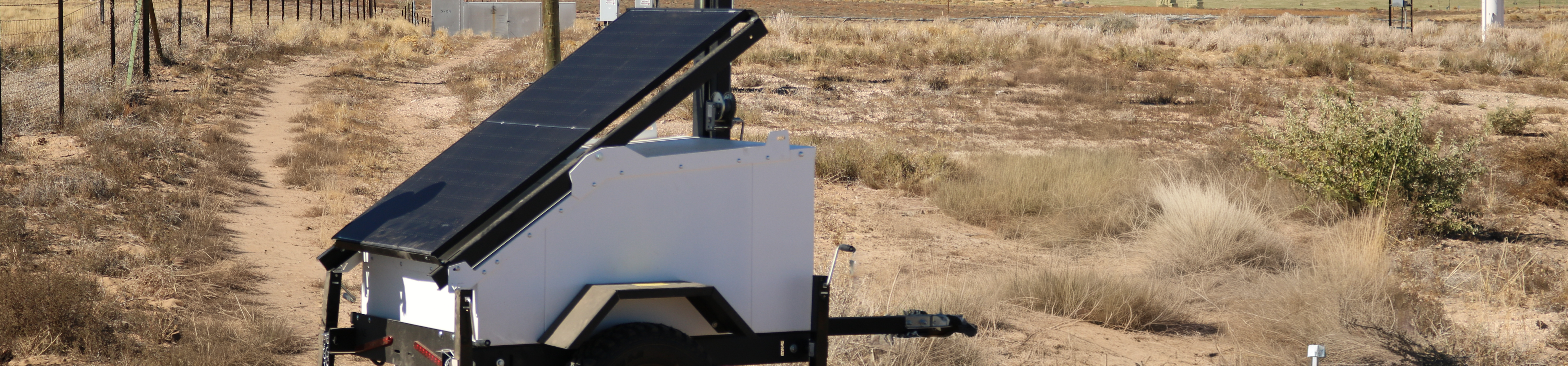
POP trailers operate completely off-grid using solar energy. The system consists of three primary components working in harmony: solar panels that convert sunlight to electricity,batteries that store energy for nighttime and cloudy periods, and a charge controller that manages the flow of power between them.
System Architecture
POP Trailer Power System
Technical Training Module
Function: Converts sunlight (photons) into direct current (DC) electricity through the photovoltaic effect in silicon cells.
Capacity Range
400W - 3200W
Panel Type
Monocrystalline
Voltage
12V / 24V
Performance Factors:
- Sunlight intensity: Peak generation occurs during midday (10am-2pm)
- Panel angle: Tilted toward sun for optimal capture
- Temperature: Panels are more efficient in cooler weather
- Shading: Even partial shade dramatically reduces output
- Dust/dirt: Accumulation can reduce efficiency by 5-15%
New Mexico advantage: With 310+ sunny days per year and high elevation, solar generation is exceptionally reliable across all ASC locations.
Function: Stores electrical energy as chemical potential energy for use when solar panels aren't producing (nighttime, storms, winter).
Capacity
2 × 200Ah
Voltage
12V (series/parallel)
Autonomy
48-72 hours
Battery Chemistry Options:
Sealed Lead Acid (SLA)
Lower cost, proven reliability, heavier, 3-5 year lifespan, 50% usable capacity
Lithium Iron Phosphate (LiFePO4)
Higher cost, lighter weight, 10+ year lifespan, 80-90% usable capacity, better cold performance
Most NMSU POPs use LiFePO4 batteries for their longevity and performance in variable weather conditions.
Function: Regulates power flow from solar panels to batteries, prevents overcharge/overdischarge, and provides system monitoring and remote management.
Key Components:
MPPT Solar Charge Controller
Maximum Power Point Tracking technology extracts maximum available power from solar panels (15-30% more efficient than PWM controllers)
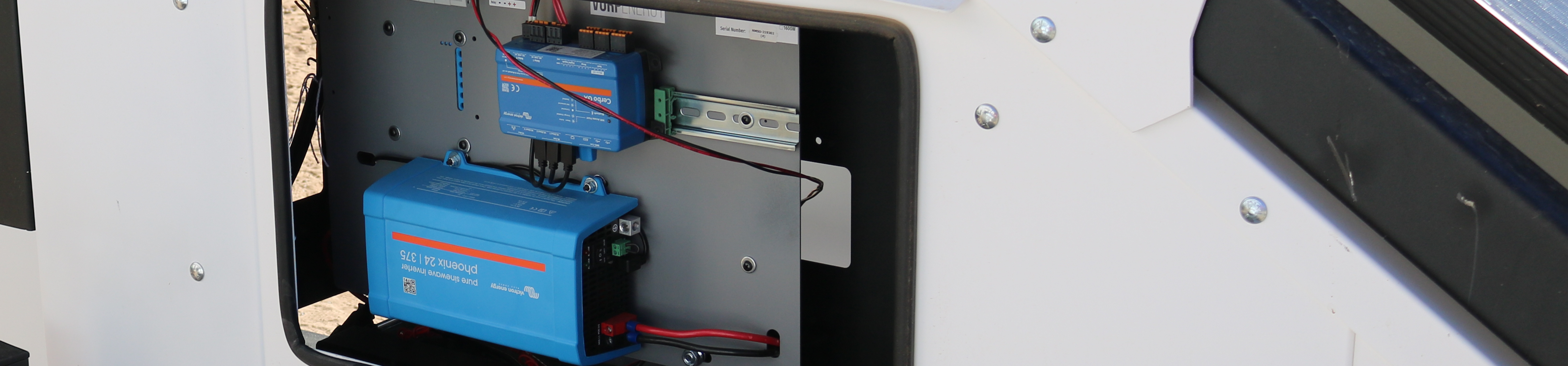
Victron Cerbo GX Monitoring System
Central monitoring hub providing real-time data on battery voltage, current, solar production, load consumption, and system health via web interface and mobile app
Protection Features:
- Overcharge protection
- Deep discharge protection
- Reverse polarity protection
- Short circuit protection
- Over-temperature shutdown
Monitoring Capabilities:
- Real-time voltage/current
- State of charge (SOC %)
- Daily energy production
- Historical data logging
- Alert notifications
Daytime (Sunny):
Solar Panels → Charge Controller → Batteries (charging) + Equipment Loads (direct power)
Nighttime / Cloudy:
Batteries → Charge Controller → Equipment Loads (battery power)
The charge controller intelligently manages power routing to maximize battery life and ensure continuous operation.
Quick Knowledge Check
Question: What type of batteries do most NMSU POPs use and why?
Think about longevity, performance, and weather conditions...
POP Trailer Technical Training | Power Systems Module