

POP Module 3 - Safety Protocols
Deployment and Mobility
Master safe hitching procedures, site selection criteria, trailer deployment, relocation processes, and safety protocols
Learning Objectives
By the end of this module, you will be able to:
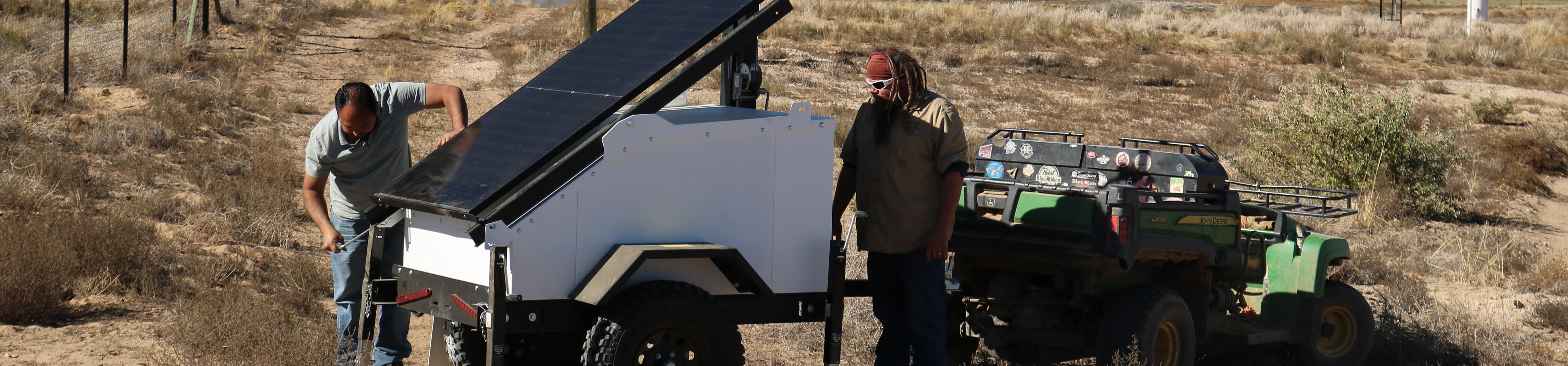
Safely hitch and unhitch the POP trailer to/from a tow vehicle
Select appropriate deployment sites based on line-of-sight and coverage requirements
Deploy stabilizing jacks and raise the telescopic mast
Execute relocation procedures when moving POPs between fields or centers
Follow safety protocols to prevent injury and equipment damage
Safety Protocols and Precautions
Critical safety information for POP deployment and operation
⚠️
Critical Safety Warning
Failure to follow safety procedures can result in serious injury or death. Always prioritize safety over speed or convenience.
If you are uncertain about any procedure, STOP and contact your supervisor or NMSU IT support before proceeding.
Electrical Hazards
Overhead Power Lines:
- NEVER raise mast near overhead power lines
- Maintain minimum 50-foot clearance from power lines
- Contact with power lines is FATAL
- If mast contacts power line, DO NOT TOUCH trailer or vehicle—call 911 immediately
- Survey site carefully before raising mast every time
Battery Safety:
- Batteries contain hazardous chemicals and store dangerous amounts of energy
- Never short-circuit battery terminals (can cause explosion/fire)
- Wear eye protection when working near batteries
- If battery is swollen, leaking, or damaged, do not touch—call for professional help
- Keep metal tools away from battery terminals
Physical Hazards
Lifting and Strain:
- Trailer tongue weight is ~150 lbs—use proper lifting technique or get assistance
- Bend knees, not back, when operating jacks or moving heavy items
- Take breaks during extended deployment work
- Stay hydrated, especially in hot weather
Pinch Points:
- Keep hands clear of hitch coupler when lowering onto ball
- Watch fingers when operating winch and raising mast
- Be aware of moving parts and pivot points
Falling Objects:
- Never stand directly under raised mast
- Secure all items in equipment enclosure before transport
- Wear hard hat if working below elevated equipment
Environmental Hazards
Weather Conditions:
- Do not deploy in high winds (>25 mph)—mast can be unstable
- Avoid deployment during lightning storms—mast is lightning attractor
- In extreme weather forecast, lower mast and secure trailer
- Wet conditions make surfaces slippery—use caution
Wildlife and Terrain:
- Watch for rattlesnakes and other wildlife in rural areas
- Wear appropriate footwear (closed-toe, sturdy)
- Be aware of uneven ground and trip hazards
- Carry first aid kit and communication device
Sun Exposure:
- New Mexico sun is intense—wear sunscreen and hat
- Take breaks in shade during hot weather
- Bring adequate water (1 gallon per person for full deployment)
Equipment Protection
Preventing Damage:
- Always retract mast before transport
- Secure equipment enclosure door to prevent damage during travel
- Avoid driving over large rocks or obstacles that could damage undercarriage
- Do not exceed 15 mph when towing over rough terrain
- Check tire pressure before each transport (35 PSI typical)
Security:
- Lock equipment enclosure when unattended
- Consider removing hitch assembly for long-term deployments (theft deterrent)
- Report any tampering or damage immediately
Emergency Contacts
Immediate Emergencies:
- 911 Medical emergency, fire, electrical contact
- NMSU Police (575) 646-3311
- Poison Control 1-800-222-1222
Technical Support:
- NMSU ACES IT Support 575-646-3305 / aces_help@nmsu.edu
- After HoursContact your ASC coordinator